
Big Feelings, Little Kids: An Anger Management Guide Through Storytelling and Support
If you’ve ever found yourself face-to-face with your child’s outburst—yelling, stomping, throwing, or shutting down—and wondered quietly, “What am I doing wrong?”, you’re not alone. These intense moments, filled with big emotions and even bigger reactions, can leave any parent feeling overwhelmed, discouraged, or guilty. But the truth is, having a child who struggles with anger doesn’t mean you’re doing something wrong. It means you’re raising a little human still learning how to handle life’s big feelings.
What Triggers Anger in Children (Ages 4–7)
Anger in young children is rarely “just acting out.” Often, it’s a response to something they can’t explain—like frustration, sensory overload, a sudden change in plans, or simply being tired or hungry. They may feel ignored, misunderstood, or out of control.
At these ages, children don’t yet have the brain development needed for consistent impulse control. That means they react quickly, loudly, and physically. Their behavior might look defiant, but it’s often a signal: “I don’t know how to handle this.”
Why Emotion Regulation Skills Matter
When left unaddressed, unregulated anger can affect every part of a child’s life. It may lead to struggles with friends, challenges in the classroom, low self-esteem, or even internalized shame. A child might begin to see themselves as “bad” or “too much,” especially if adults respond with frustration or disconnection.
That’s why emotion regulation is just as essential as learning to read or tie shoes. Teaching kids how to recognize, express, and manage their anger helps them build confidence, resilience, and strong relationships.


Parents as Emotional Coaches: You Set the Tone
One of the most powerful things a parent can do is model calm responses. When a child is melting down, what they need most is not a lecture—but your steady presence.
Of course, that’s not always easy. A child’s anger can trigger your own—especially when you’re tired, in public, or feeling powerless. But when you meet your child’s big feelings with empathy and calm, you’re sending a powerful message: “You’re safe. I’m here. We can get through this together.”
This doesn’t mean being perfect. It means staying present and connected—even when emotions run high.
Using Stories to Support Kids’ Anger Management
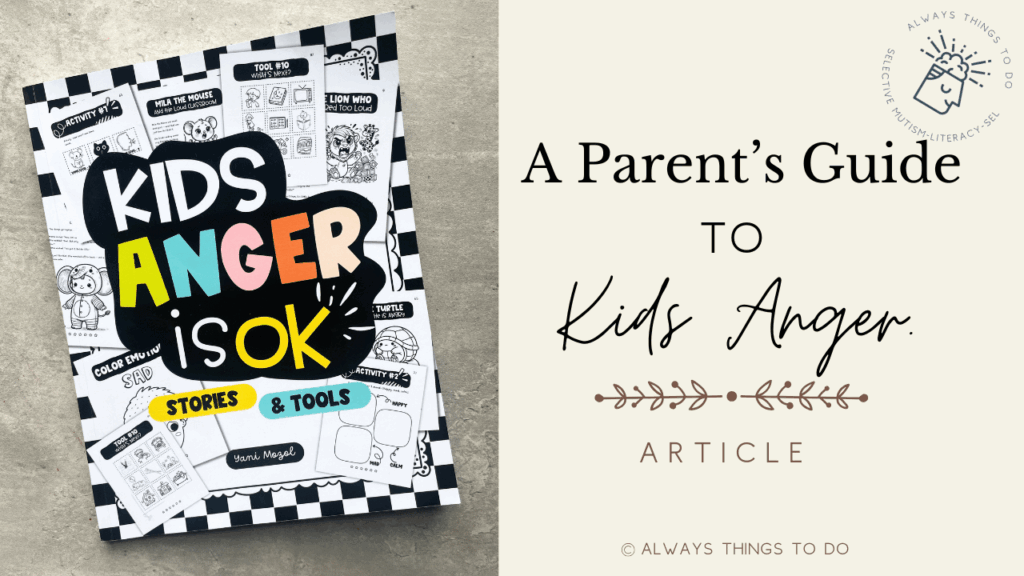
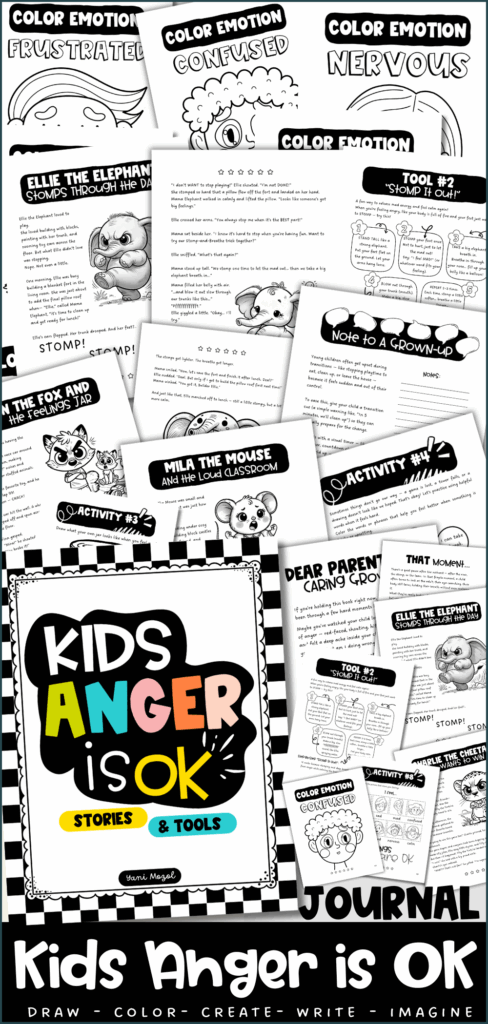
That’s the heart behind the Anger Management Workbook Through Stories for Kids. It’s not just a workbook—it’s a journey of connection and growth.
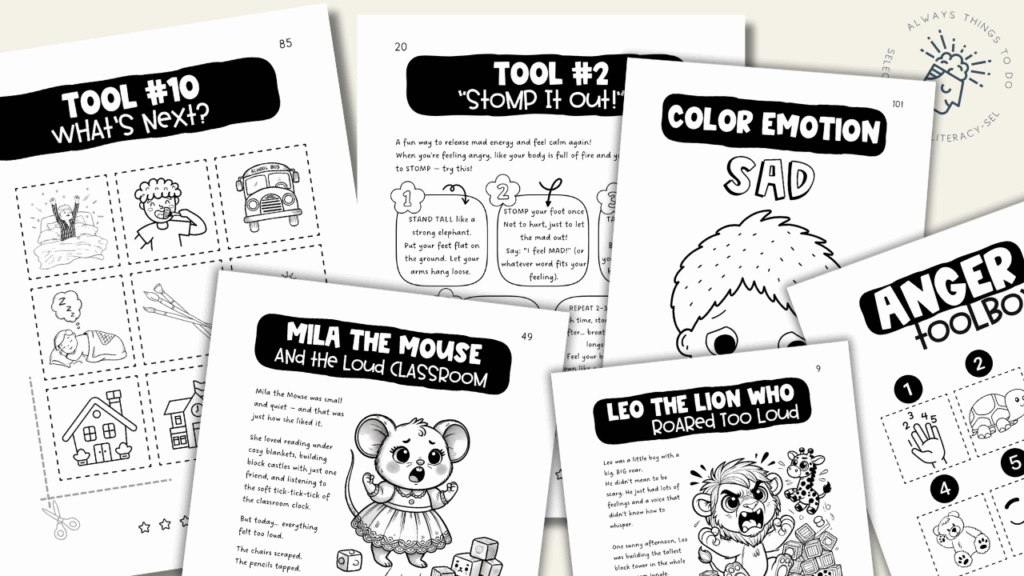
Each story features a relatable animal character, like Leo the Lion who roars when he’s upset or Mila the Mouse who struggles in loud spaces. These gentle tales show children that they’re not alone—and that even big feelings can be managed with practice.
After each story, you’ll find a matching calming strategy your child can try—like finger breathing, hugging a stuffed animal, or blowing bubbles. These simple tools are grounded in child development and designed to be practiced together during quiet moments.
Building Lifelong Coping Skills (Not Just Quick Fixes)
One important reminder: this journal isn’t meant to be used during a meltdown. When a child is overwhelmed, their brain isn’t ready to learn—it needs safety and time to settle.
The real learning happens in the calm, connected moments between the storms: bedtime routines, afternoon cuddles, or quiet playtime. That’s when your child is most open to learning and practicing emotion regulation and impulse control.
With repetition and loving guidance, these strategies begin to stick. And what starts as a story or breathing game becomes a lifelong skill your child can rely on.
Keep Showing Up—You’re Doing More Than You Think
If you’re feeling overwhelmed, exhausted, or unsure—you’re not alone. You don’t have to have all the answers. You just need to keep showing up, again and again, with love and patience.
Every time you pause to read a story, offer a calming tool, or sit quietly through your child’s big feelings, you’re planting seeds. Seeds of trust. Seeds of self-regulation. Seeds of emotional strength.
Those seeds will grow. Your child will learn that anger is something they can understand and manage—with your help.
So let’s begin—one story, one breath, one calm step at a time.
Your child is ready. And so are you.

Other reading recommendations:
Inside the Kids Anxiety Journal: Tools That Help Children Feel Safe and Seen.